
THE MONDAY WEBINAR SERIES:
Knee Pain - Different Thinking. Better Outcomes
Knee pain is one of the most commonly diagnosed — and commonly misunderstood — complaints in musculoskeletal practice.
Knee pain often gets labelled as “meniscus damage”', "cartilage wear" or just "degeneration." Sometimes this might be the case, but often these are general catch all terms that don't mean that much.
In this recorded webinar, we step away from the scan results and move back toward structure, load and movement.
Using cadaveric dissection footage, we’ll explore:
The layered anatomy of the knee — capsule, fat pads, retinacula, fascia, ligament complexes
Look at how load actually transfers through the tibiofemoral and patellofemoral joints
Discuss why the knee rarely operates as an isolated hinge
Show how hip and foot mechanics alter stress distribution
Why structural findings and pain frequently don’t correlate
Terms like “chondromalacia,” “IT band syndrome,” “patellofemoral pain” and “wear and tear” are often used with confidence. But how robust is the reasoning behind them?
And how often are we simply naming pain rather than explaining it?
Knee Pain
New thinking for different outcomes
For permanent access to this and previous webinars
Join the Archive Membership
£12.50
per month
ABOUT THIS WEBINAR
Knee Pain - Different thinking, better outcomes
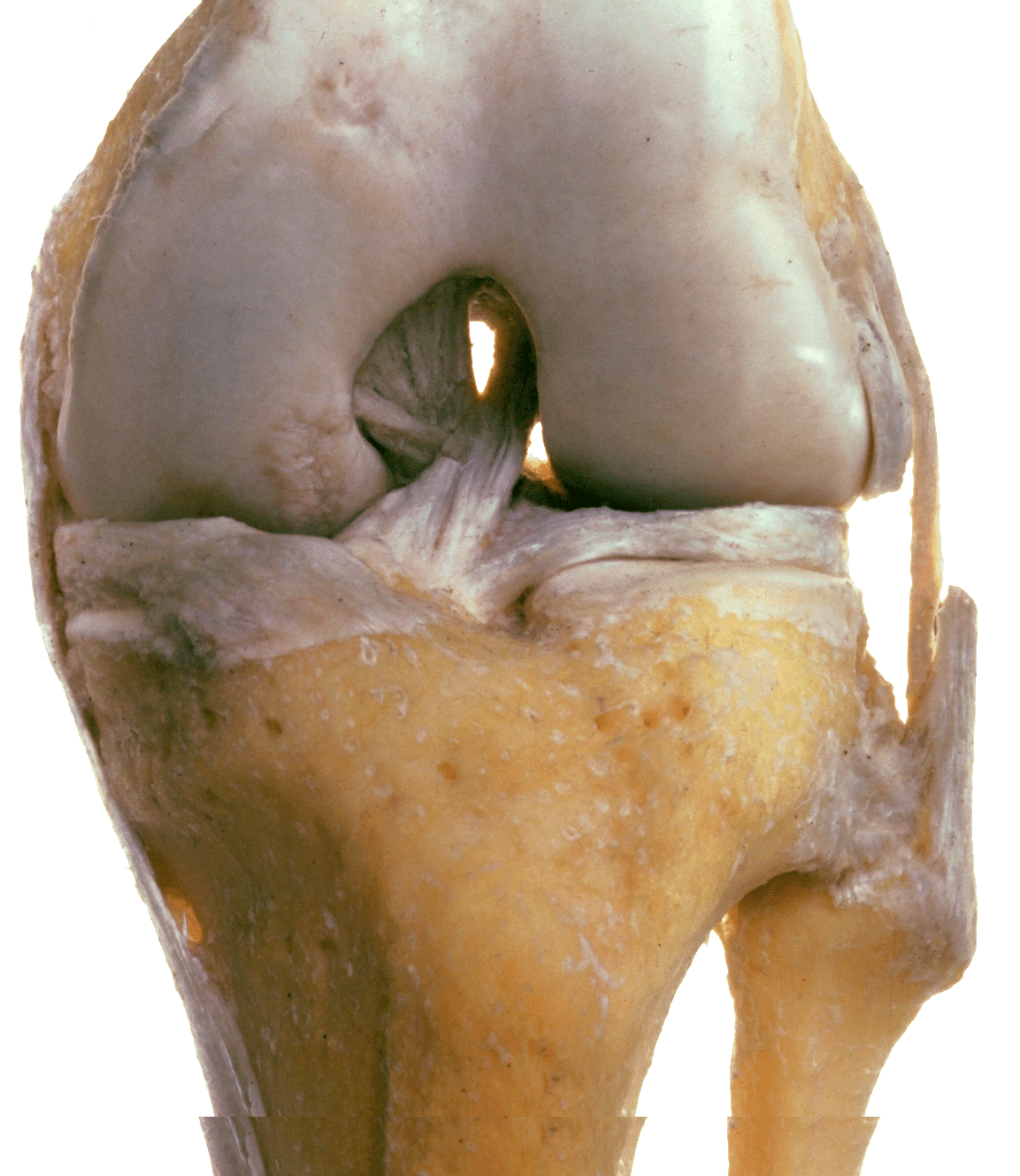
This webinar is for therapists, movement teachers and curious practitioners who want a clearer, more realistic way of thinking about knee pain, load, movement and the limits of structural diagnosis.
In this webinar we'll explore:
How to gain clearer understanding of knee load management
A more coherent model for assessment
Practical insights to apply immediately
How traditional diagnosis can mask reality
Load and load transfer above and below the knee
What other structures need to be considered
Format & access
(approx. 60 minutes)
Recorded webinar, available instantly
Ongoing access available via the
Webinar Collection Membership
Other Webinars In This Series Include
Adhesions vs scars. What's the difference?
Fascia in the ageing body
Shoulders aren't ball and socket joints
Spines negotiate rather than collapse
Fascia and Load
Pain. Systems not structures
Forward head posture. The new smoking?
Frequently Asked Questions
What is this knee pain webinar about?
This recorded webinar explores knee pain through anatomy, load, movement and clinical reasoning rather than relying only on scan results or structural labels.
Do meniscus tears always cause knee pain?
No. Meniscus tears and other structural findings can appear on scans in people with and without pain. The webinar looks at why structure and symptoms do not always match.
What does cartilage wear mean?
Cartilage wear is often used as a simple explanation for knee pain, but it does not automatically explain symptoms. The webinar explores cartilage, load, movement behaviour and the wider knee system.
Is the knee just a hinge joint?
No. The knee behaves more like a complex load-transfer system involving the tibiofemoral joint, patellofemoral joint, capsule, fat pads, retinacula, ligaments, fascia, hip and foot mechanics.
Who is this webinar for?
This recorded webinar is for therapists, movement teachers, bodyworkers and health practitioners who want a clearer way to think about knee pain, diagnosis, load and movement.
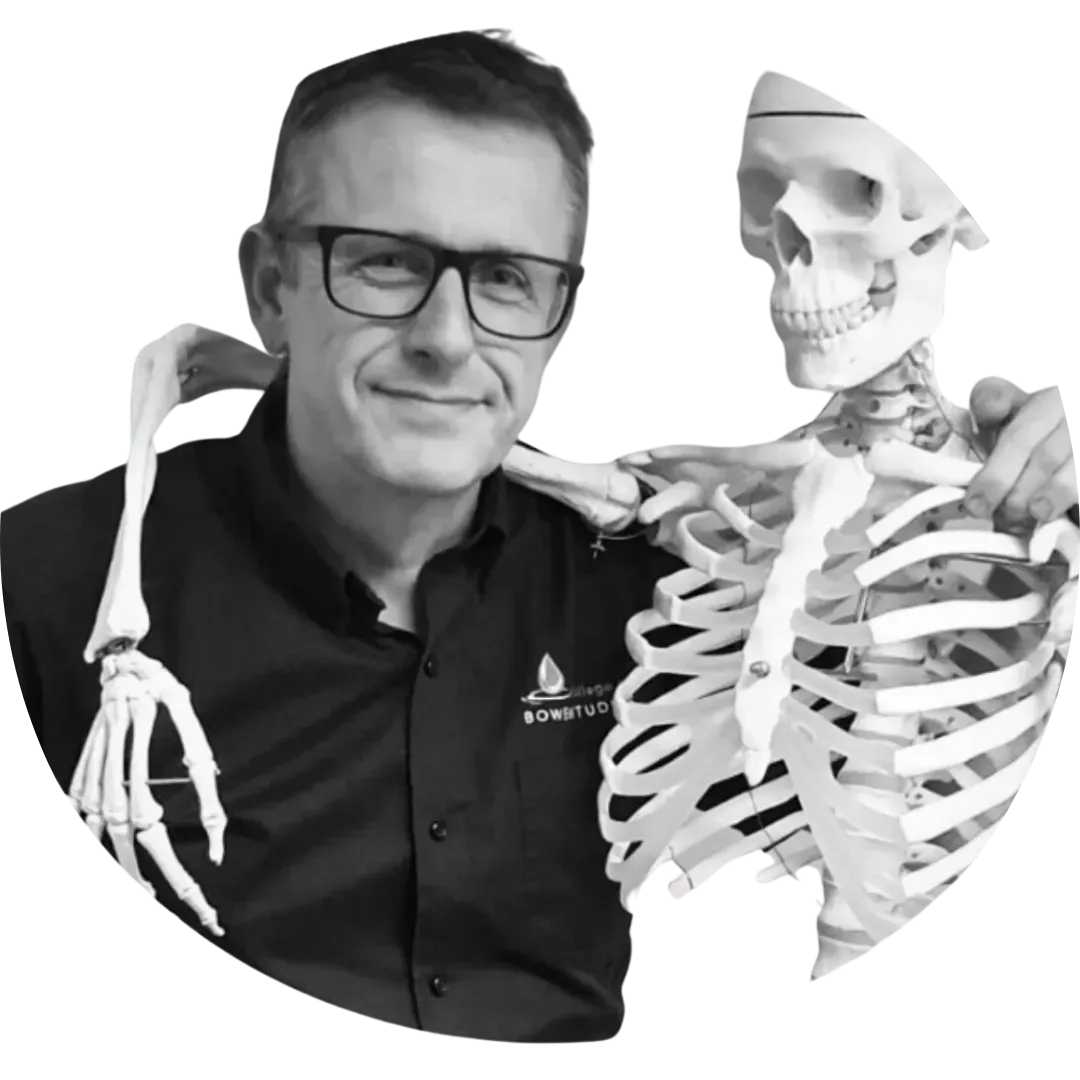
ABOUT JULIAN
JULIAN BAKER BSc (Hons)
Functional Anatomist and Health Science Educator
Julian has been teaching anatomy, dissection and bodywork classes for over thirty years.
Something of a heretic within the anatomical establishment, he challenges the norms of conventional anatomical thinking and creates a new paradigm in how anatomy is taught.
His humorous, gentle and patient approach encourages application over academic knowledge and seeks to dismantle what many of us take for granted.
Julian has decades worth of experience in the therapy field and has a depth of knowledge that is second to none, ensuring that any learning experience with him is unforgettable
READ SOME REVIEWS
Don't just take our word for it...
"To 'see' the soft tissue we as therapists think we influence is a privilege. Julian Baker makes all the right connections between the 'tissue' and considerations for therapeutic intervention. Functional Anatomy is a must for all 'hands on' therapists. It is also a must for the 'hands off' body of therapists! Seeing is believing.."
"Captivating, often bizarre and incredible insights into the human body like you have never seen before. Always life changing sessions, questioning the “norm” as we are taught it and bringing new dimensions to your practise.
If you attend one of Julian's classes your working brain will be changed forever - for the better and you will only want to see more!! His humour is also legendary!!"
"I have just participated in the scar tissue dissection course. This is an incredible lesson in anatomy. Julian takes you on a journey thru a human body like you've never been before. It is amazing to see how a human body is really built, how strong, how resilient. Eye-opening and educating. Thank you.
I will be back for more."
ARE YOU READY TO BUY THIS WEBINAR?
We're excited to have you on board!
Site: www.touchmoveheal.com
Email: [email protected]

Touch Move Heal All rights reserved