
Fascia and the Ageing Body
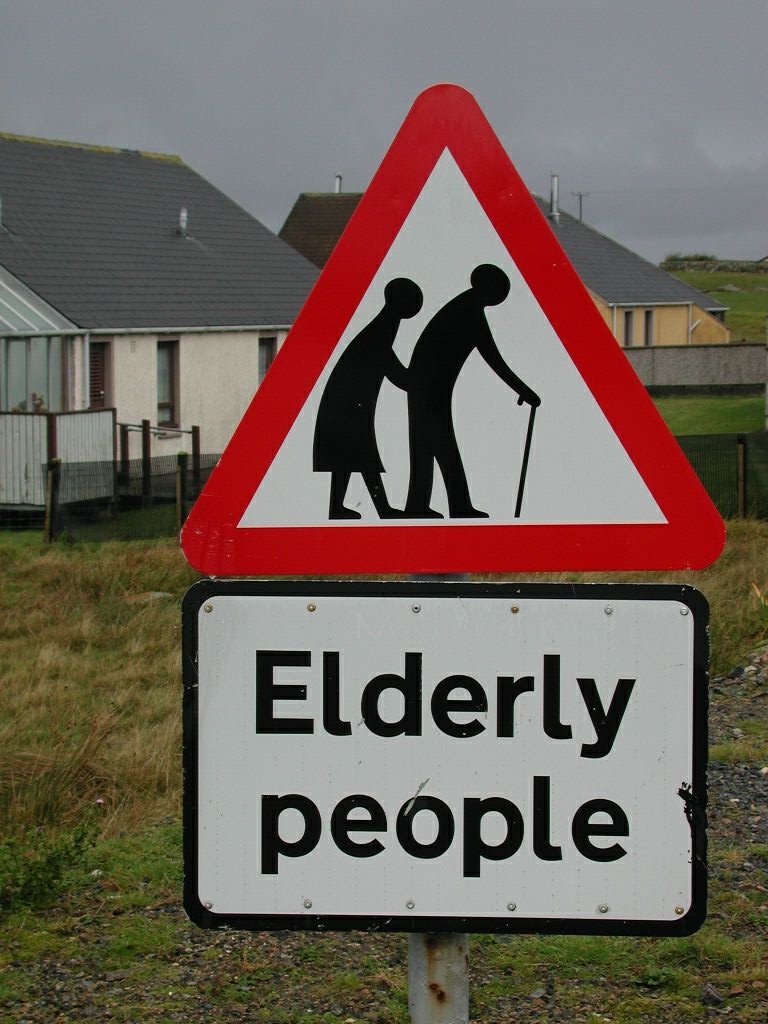
Fascia and the Ageing Body. What actually changes and what still adapts
Ageing is often framed and almost universally accepted in society as an inevitable physical decline. Things slowly stiffen and tissues are said to “dry out.” Fascia comes in for some blame as if it quietly turns into wrinkled clingfilm over time, wrapping the body in restriction and slowing movement. It’s a compelling, if not somewhat depressing story, but thankfully is also somewhat incomplete.
What we see in real tissue during dissection and what the literature suggests, is a lot more nuanced. Change certainly takes place as part of the ageing process but as to why and what is driving it, is another matter.
What is fascia actually doing?
As I am constantly pointing out any time I get the chance, fascia is not a single structure. It’s a connective tissue network with a vast degree of variability in terms of function, position, fluid content and location. superficial, deep, visceral and so forth. The network is simultaneously structural and responsive and transmits force, distributes load and provides a medium through which muscles, nerves and vessels interact.
Unlike bone, fascia is not a fixed scaffold, but is highly adaptive. It can remodel and respond to load, movement, hydration and metabolic factors, behaving much more like a dynamic system than a passive wrapping.
These elements are important to bear in mind, because when we talk about ageing, we need to decide whether we’re describing an inevitable material decline or a shift in how that system is being used.
What changes with age?
There are a number measurable changes in connective tissue with ageing. Collagen turnover slows and the cross-linking between collagen fibres increases. Collagen fibres don’t sit alongside each other, but are connected by chemical bonds that help stabilise the tissue. These turn over more slowly with age and the collagen hangs around for a longer period, increasing the potential for cross links to accumulate.
Elastin content may also reduce and aspects of hydration can change, all changes that are often associated with increased stiffness at a tissue level (Narici et al., 2008; Kjaer, 2004).
In dissection, we can see this show up as denser, more adherent fascial layers in some older donors. Planes that might separate cleanly in younger tissue feel more bound together, but interestingly this is not felt uniformly.
Some older donors show relatively supple, well-defined fascial planes, where others show marked densification. Speculation is all we have available when we see that some tissues are different, buthave no reliable functional history for these individuals. We don’t know how they moved, loaded, rested, or adapted in the final decades of their lives or even before that. So while age certainly correlates with tissue change, it doesn’t explain the wide variation.
Load, behaviour, and adaptation
It’s been well established that connective tissue responds to mechanical loading. We know that tendons, ligaments and fascial tissues, all adapt their structure based on the forces they experience over time. (Magnusson et al., 2008).
It’s also known that reduced movement variability, prolonged sedentary lifestyles, or repetitive low-range loading may all contribute to changes in the way that tissues organise themselves. So an increase in cross-linking and a reduction in sliding between layers, may tell us just as much about how the tissue has been used, rather than just how old it is.
Conversely, regular movement, particularly varied, multi-directional load, appears to support the maintenance of tissues with more adaptable properties (Schleip et al., 2012).
With all this information, the better question than “Does fascia stiffen with age?” Might be, “what environments does fascia adapt to over time?” Ageing may change the baseline conditions, metabolism, recovery capacity, hormonal mixing bowl and so forth, but behaviour still shapes the outcome.
Hydration, viscosity, and the “drying out” narrative
As we have established, idea that fascia “dries out” with age is something of an oversimplification albeit with a degree of reality behind it.
Fascial tissues contain ground substances which play a role in lubrication and viscosity between layers. It’s been shown that changes in hydration and viscosity both issues associated with ageing, can affect how easily tissues glide (Stecco et al., 2011).
However, this is not simply about drinking more water or even applying local pressure to “rehydrate” tissue as is sometimes claimed. The transport of fluid in, through and around connective tissue is influenced by movement, pressure gradients, as well as mechanical deformation. In other words, movement is one of the most important aspects in fluid exchange.
Reduced movement means, reduced fluid dynamics, (the way fluids shift, spread, and circulate through tissues as we move and load them) andreduced fluid dynamics may well contribute significantly to increased perceived stiffness.
The amount of time this takes and the degree of stiffness experienced isn’t a set outcome, but we can confidently say that behaviour sits at the heart of the process.
The nervous system is part of the story
Ageing isn’t just confined to understanding the change in tissues, but also has some roots in the nervous system.
Changes in proprioception, motor control and sensory processing, all influence how movement is organised. If movement becomes more cautious, less varied, or more restricted in any way, the mechanical environment of fascia changes accordingly.
What we feel as “stiffness”isn’t just mechanical, but is an experience shaped by both tissue and neural interpretation. This is one reason why two people with similar structural changes can report very different levels of stiffness or discomfort.
What this means clinically

If fascia were simply degenerating with age, we as therapists would be limited in terms of what we could achieve or hope for. We would be trying to reverse an inevitable decline set in motion by time and would fail like King Canute in front of the tide
But if fascia is adapting to behaviour as much as chemistry, then the picture changes dramatically.Instead of trying to “fix” tissue that can’t be fixed, we are instead influencing the environment in which that tissue operates.
That shifts the focus towards:
Movement variability rather than isolated stretching
Load tolerance rather than structural correction
Gradual exposure rather than aggressive intervention
Supporting confidence in movement rather than reinforcing fragility
It also drastically reframes manual therapy in terms of what we think we might be doing. Hands-on work may alter perception, modulate tone, and create a window for change, but it is very unlikely to be “remodelling fascia” in any meaningful structural sense, at least in the short term.
In the longer term adaptation comes not from what we’ve done in the session room, but from what the client does next.
Ultimately, does fascia age?
Yes. And no.
Fascia does indeed change with age, that much is clear.But those changes are far from uniform, and they are not purely driven by time. Whilst ageing itself puts a person in the situation, it’s behaviour that determines the outcome of it.
If we treat ageing as a one-way mechanical decline, we miss the built in adaptive ability that remains throughout life. Yet if we ignore biological changes altogether, we oversimplify things in the opposite direction.
The middle way is a core Buddhist philosophy that promotes a middle ground in perspective, avoiding attachment to fixed views, good vs bad labels or extreme opinions.Few things are ever black and white and this is particularly the case when we talk about the process of ageing, whether it be fascial or otherwise.
Fascia is always adapting, age will be an influencing the condition but behaviour influences the direction.There is no one set outcome, as witnessed by the world around us.
There are people in their 70s and 80s who move with fluidity, adaptability, and resilience and at the same time there are people decades younger who look and feel restricted and stiff.
The difference isn’tjust in tissues, but in their history of movement, load, recovery and importantly, belief.
We can’t stop ageing, but we can influence hugely how we do it.
References
Kjaer, M. (2004) ‘Role of extracellular matrix in adaptation of tendon and skeletal muscle to mechanical loading’, Physiological Reviews, 84(2), pp. 649–698.
Magnusson, S.P., Langberg, H. and Kjaer, M. (2010) ‘The pathogenesis of tendinopathy: balancing the response to loading’, Nature Reviews Rheumatology, 6(5), pp. 262–268.
Narici, M.V., Maganaris, C.N., Reeves, N.D. and Capodaglio, P. (2008) ‘Effect of aging on human muscle architecture’, Journal of Applied Physiology, 95(6), pp. 2229–2234.
Schleip, R., Findley, T.W., Chaitow, L. and Huijing, P.A. (eds.) (2012) Fascia: The Tensional Network of the Human Body. Edinburgh: Elsevier.
Stecco, C., Stern, R., Porzionato, A., Macchi, V. and De Caro, R. (2011) ‘Hyaluronan within fascia in the etiology of myofascial pain’, Surgical and Radiologic Anatomy, 33(10), pp. 891–896.
Wilke, J., Schleip, R., Yucesoy, C.A. and Banzer, W. (2018) ‘Not merely a protective packing organ? A review of fascia and its force transmission capacity’, Journal of Applied Physiology, 124(1), pp. 234–244.


