
THE MONDAY WEBINAR SERIES:
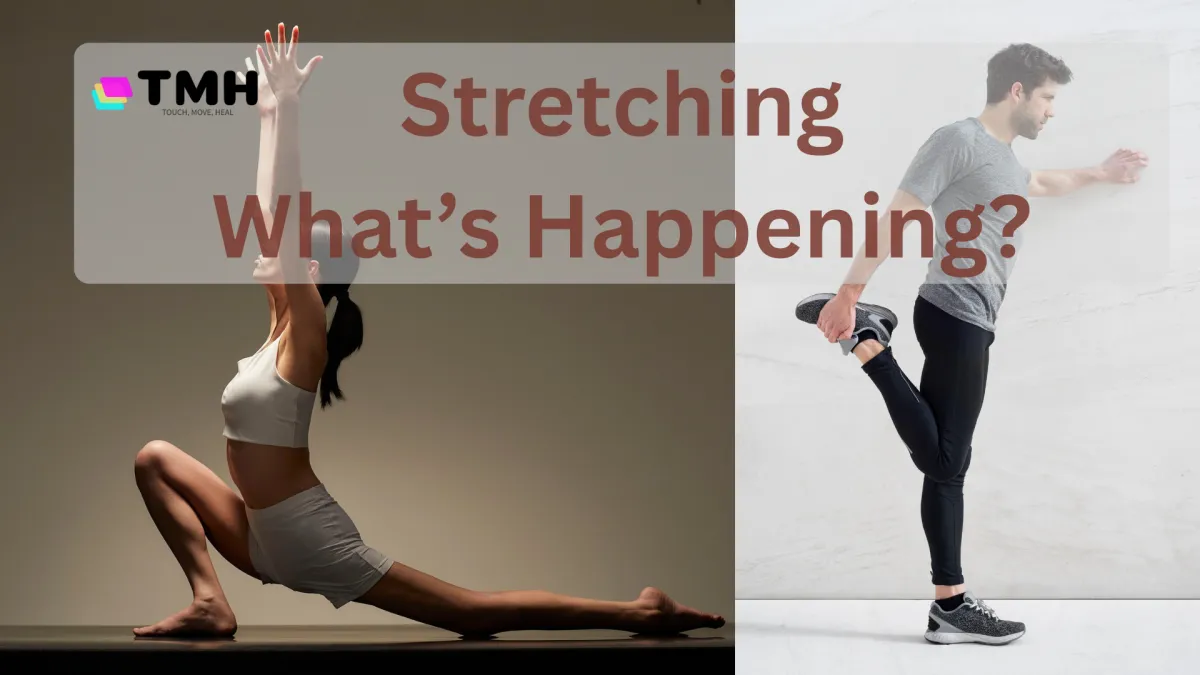
Stretching: What's Really Happening
Stretching: Are we lengthening tissue, changing sensation, or learning to use range differently?
We talk about stretching in terms of lengthening muscle, but this doesn't really explain it.
The idea has always been that something feels 'tight' or limited and then once stretched, the tissue lengthens and the body moves better.
Because stretching often does increase range of motion, this story feels even more convincing.
But like many common explanations in anatomy, therapy and movement, it becomes misleading when we treat it as the whole truth.
In this webinar, we’ll look at what stretching actually seems to change, why “tight” does not always mean “short”, and why gaining range does not automatically prove that tissue has been mechanically lengthened.
We’ll explore:
The common story of tight muscles, short tissues and making them 'longer'
The difference between being bendy, flexible, mobile and functionally capable
Why flexibility gains may have more to do with stretch tolerance than permanent tissue length
What we can honestly say about muscle, fascia, tendon and the nervous system during stretching
Why Golgi tendon organs, mechanoreceptors and “release” explanations are often overused
Why stretching may help range of motion without being a reliable injury-prevention tool
Why yoga and Pilates may be valuable for reasons that go far beyond stretching
What pandiculation is, and why the morning yawn-stretch gives us a different way of thinking about movement
Whether stiffness is always bad, or sometimes useful, protective and task-specific
When more flexibility is useful, and when more range without control may not be the answer
How to explain stretching to clients without frightening them, overpromising, or pretending we know more than we do
Do we stretch because tissues are short?
The answer is: sometimes perhaps, but not in the simple way we’re often told.
Stretching can increase range of motion, there's no controversy there.
The more interesting question is why range improves.
Longer muscles, tendon changes? Or perhaps the nervous system became less protective? Did the person simply tolerate the sensation better and did the position become more familiar and less threatening?
Those are very different explanations that will lead to very different conversations with clients.
This webinar will help us keep the useful parts of stretching, yoga, Pilates and mobility work, but will provide updated explanations to support what we do.
What does stretching actually do?
ABOUT THIS WEBINAR
Stretching: What's really happining
This webinar is for therapists, movement teachers, trainers and anyone who wants a more accurate understanding of stretching, mobility and range of motion.
In this webinar we'll explore:
The common story of tight muscles, short tissues and stretching them longer
The difference between being bendy, flexible, mobile and functionally capable
Why flexibility gains may have more to do with stretch tolerance than permanent tissue length
What we can honestly say about muscle, fascia, tendon and the nervous system during stretching
Why Golgi tendon organs, mechanoreceptors and “release” explanations are often overused
Why stretching may help range of motion without being a reliable injury-prevention tool
Why yoga and Pilates may be valuable for reasons that go far beyond stretching
What pandiculation is, and why the morning yawn-stretch gives us a different way of thinking about movement
Whether stiffness is always bad, or sometimes useful, protective and task-specific
When more flexibility is useful, and when more range without control may not be the answer
How to explain stretching to clients without frightening them, overpromising, or pretending we know more than we do
Webinar Schedule
22 June - Why Won't Clients Do Their Exercises?
06 July - Hip Stability - Local or Systemic?
20 July - Food vs Weight Loss Jabs
03 Aug - Deep vs Light: Does Pressure Really Matter?
Previous 2026 Webinars
Spines negotiate rather than collapse
Muscle Building and the Microtrauma Myth
Shoulders aren't ball and socket joints
Fascia in the ageing body
Adhesions vs scars. What's the difference?
Fascia and Load
Pain. Systems not structures
Forward head posture. The new smoking?
Knee Pain. New thinking, better outcomes
Format & access
Recorded webinar, available instantly
Ongoing access available via the
Webinar Collection Membership
Frequently Asked Questions
What is this stretching webinar about?
This recorded webinar explores what stretching actually changes, including range of motion, sensation, stretch tolerance, load, tissue behaviour and nervous system response.
Does stretching lengthen muscles?
Stretching can increase range of motion, but that does not automatically prove that muscles have been permanently lengthened. The webinar explores alternative explanations including sensation, tolerance and familiarity with range.
What does it mean when a muscle feels tight?
A feeling of tightness does not always mean a tissue is physically short. Tightness may involve sensation, protection, load history, fatigue, expectation, nervous system response and movement behaviour.
Is stretching useful for injury prevention?
Stretching may help some people improve range of motion, but it is not a simple or guaranteed injury-prevention tool. The webinar looks at why context, strength, control, load and task demands matter.
Who is this webinar for?
This recorded webinar is for therapists, movement teachers, trainers, bodyworkers and health practitioners who want a clearer explanation of stretching, flexibility, mobility and range of motion.
ABOUT JULIAN
JULIAN BAKER BSc (Hons)
Functional Anatomist and Health Science Educator
Julian has been teaching anatomy, dissection and bodywork classes for over thirty years.
Something of a heretic within the anatomical establishment, he challenges the norms of conventional anatomical thinking and creates a new paradigm in how anatomy is taught.
His humorous, gentle and patient approach encourages application over academic knowledge and seeks to dismantle what many of us take for granted.
Julian has decades worth of experience in the therapy field and has a depth of knowledge that is second to none, ensuring that any learning experience with him is unforgettable
READ SOME REVIEWS
Don't just take our word for it...
"To 'see' the soft tissue we as therapists think we influence is a privilege. Julian Baker makes all the right connections between the 'tissue' and considerations for therapeutic intervention. Functional Anatomy is a must for all 'hands on' therapists. It is also a must for the 'hands off' body of therapists! Seeing is believing.."
"Captivating, often bizarre and incredible insights into the human body like you have never seen before. Always life changing sessions, questioning the “norm” as we are taught it and bringing new dimensions to your practise.
If you attend one of Julian's classes your working brain will be changed forever - for the better and you will only want to see more!! His humour is also legendary!!"
"I have just participated in the scar tissue dissection course. This is an incredible lesson in anatomy. Julian takes you on a journey thru a human body like you've never been before. It is amazing to see how a human body is really built, how strong, how resilient. Eye-opening and educating. Thank you.
I will be back for more."
ARE YOU READY TO BUY THIS WEBINAR?
We're excited to have you on board!
Site: www.touchmoveheal.com
Email: [email protected]

Touch Move Heal All rights reserved