
TMH Webinar Series
Tight Hamstrings: Why Stretching May Not Solve the Problem
Anatomy, sensation and what stretching actually changes.
Monday 28th September 7pm
Advance Booking: £9.50
Book before the live broadcast and get the webinar for £9.50, including 14 days’ replay access.
After the live broadcast, the replay price is £25.
Hamstrings
“My hamstrings have always been tight.”
It’s something therapists, trainers and movement teachers hear all the time.
The usual response is stretch. Hold it longer, do it more often, then try another technique.
But when someone has been stretching for years and still describes their hamstrings as tight, what are we actually trying to change?
Is the muscle short? Is the movement uncomfortable? What part might the nervous system play? And how much can touching your toes really tell us?
In this webinar, we’ll use real human dissection, anatomy and research to explore the hamstrings and question some familiar explanations for tightness, flexibility and stretching.
If stretching changes how far you can move, does that tell us what was limiting you in the first place?
What exactly are we calling "tight.”
A client describes a pulling sensation a therapist feels some resistance or someone struggles to straighten their knee or reach the floor.
All three might be described as “tight hamstrings”, but are they describing the same thing? Does "tightness" predict or even cause injury.
We’ll explore the differences between a feeling of tightness, resistance to movement and a restriction in range — and why treating those as interchangeable can lead us towards an explanation before we’ve properly considered the problem.
Before deciding that a muscle needs lengthening, it helps to ask what we’ve actually observed.
Where does stretching fit?
Stretching can be useful. The more interesting questions are useful for what, for whom, and with what expectations?
We’ll look at stretch tolerance, tissue behaviour, strength and loading, movement choices and the relevance of the task someone actually wants to perform.
Touching the floor might matter to one person. Walking comfortably, running or getting back to gardening might matter much more to another.
What do we want this person to be able to do and how will we know whether our approach is helping?
Tight Hamstrings and Stretching
For permanent access to this and previous webinars
Join the Touch Move Heal Membership
£12.50
per month
Read More Reviews. Click Below
See the hamstrings for yourself
Anatomy diagrams make the hamstrings look like neatly separated muscles running down the back of the thigh.
Human dissection gives us a much richer view.
We’ll look at their attachments, tendons and surrounding connective tissues, their relationship with the sciatic nerve, and how they fit into the anatomy of the pelvis, hip and knee.
That gives us a starting point for thinking about what happens when we stretch, load or work with the back of the thigh.
You can reach further. What changed?
Someone bends forwards, receives a treatment or performs a stretch, then reaches closer to the floor. Something has changed.
But have we demonstrated that their hamstrings were physically lengthened? Or that fascia was released? Or that the original limitation was located in the hamstrings at all?
We’ll examine what stretching research measures, what those measurements can tell us, and why an improvement in movement doesn’t automatically confirm the explanation attached to it.
"I really enjoy Julian speak and present. It's clear, personable and informative."
CL - Massage Therapist
Are 'hamstrings' a real functional group?
If not what's missing and how can the term be extended
In this webinar we'll explore
Hamstring anatomy: attachments, tendons and relationships around the pelvis, hip and knee.
Flexibility and injury: does a limited straight leg raise predict hamstring injury?
More than three muscles: how semitendinosus joins up with other muscles and why real anatomy works differently
What “tight” means: sensation, stiffness, muscle length and restricted movement.
Stretching and flexibility: what an increase in range actually demonstrates
Stretch tolerance: how the experience of a stretch can influence its endpoint.
The sciatic nerve: why the back of the thigh deserves a wider anatomical view.
Pelvic position and movement: what bending forwards can and cannot tell us.
Strength and loading: where they fit alongside stretching.
Treatment and “release”: how to distinguish a useful response from an assumed mechanism.
ABOUT THIS WEBINAR
A closer look at a very familiar problem
This webinar is for massage therapists, bodyworkers, Pilates and yoga teachers, personal trainers, movement professionals and anyone interested in understanding the body beyond the usual explanations.
In this webinar we'll explore:
We’ll connect the anatomy with questions that come up in everyday practice:
What do you say to someone whose hamstrings always feel tight?
What are you assessing when you ask them to bend forwards?
And what would make you reconsider the advice to keep stretching?
You’ll leave with a clearer way to think about the hamstrings, explain stretching and question what a change in movement really means.
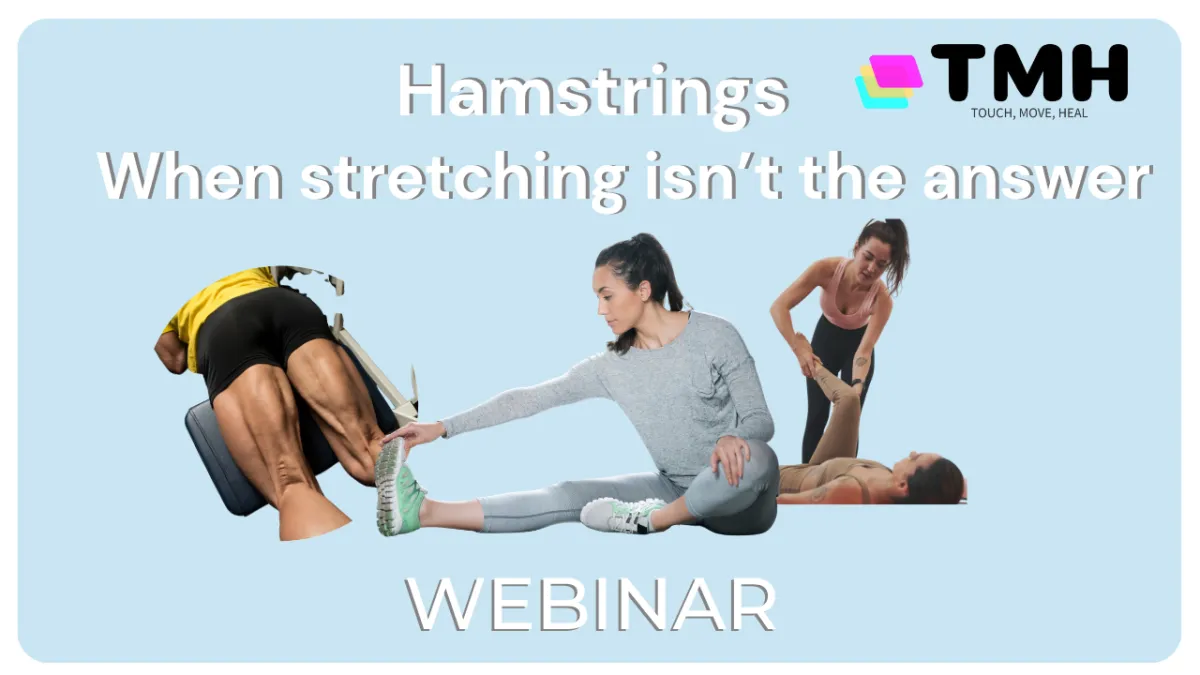
Format & access
Live webinar with Julian Baker — approximately 60 minutes.
£9.50 advance booking, including 14 days’ replay access.
Ongoing access is available through the Touch Move Heal Membership.
Other Webinars in the Series
Understanding GLP-1 Weight Loss Jabs
Core and core stability
The myth of muscle growth and micro-trauma
Stretching- what's really happening?
Why clients won't do their homework
Hip stability - more than just a local issue
Adhesions vs scars. What's the difference?
Fascia in the ageing body
Shoulders aren't ball and socket joints
Spines negotiate rather than collapse
Fascia and Load
Pain. Systems not structures
Forward head posture. The new smoking?
Knee Pain. New thinking, better outcomes
Frequently Asked Questions FAQs
Why do my hamstrings still feel tight even though I stretch?
The feeling of tightness doesn’t, by itself, tell us what is causing it. This webinar explores several possible influences, including stretch tolerance, loading, movement and the surrounding anatomy, and asks why repeated stretching may not address the concern someone actually has.
Does stretching actually lengthen the hamstrings?
Stretching can increase range of motion, but that doesn’t automatically demonstrate a lasting increase in muscle length. Changes in stretch tolerance and mechanical tissue behaviour need to be considered separately. We’ll explore what researchers measure and how the type and duration of stretching affect the question.
Is this webinar saying that stretching doesn’t work?
No. We’ll look at what stretching can achieve, what the evidence supports and where our explanations become less certain. The aim is to make better decisions about its use and explain its effects more accurately.
Does being unable to touch my toes mean I have short hamstrings?
A toe touch involves movement across several regions and is influenced by how someone performs it. We’ll examine why the distance between your fingers and the floor is an incomplete basis for deciding that your hamstrings are short or need treatment.
Will you cover the sciatic nerve?
Yes. We’ll explore its anatomical relationship with the hamstrings and why a pulling sensation in the back of the thigh shouldn’t automatically be assigned to one muscle. We’ll also discuss the limits of drawing conclusions from a stretch sensation alone.
Does having tight hamstrings make an injury more likely?
Reduced hamstring flexibility has been investigated as a possible risk factor, particularly in sport, but findings are inconsistent and depend on the population, activity and test being used. A straight-leg raise measures range, not future injury. We’ll examine what the evidence does and doesn't tell us.
Will you discuss strengthening as well as stretching?
Yes. We’ll consider strength, loading and movement alongside flexibility, with attention to what the person wants to do. The webinar will help you think through those choices rather than give everyone the same hamstring routine.
Is this only for manual therapists?
No. It is relevant to massage therapists, bodyworkers, Pilates and yoga teachers, personal trainers, movement professionals and interested members of the public. No advanced anatomy knowledge is required.
Will there be real human dissection?
Yes. Julian will use human dissection footage and images to explain hamstring anatomy and its relationships with surrounding structures.
What if I can’t attend live?
Your advance booking includes access to the recording for 14 days, so you can watch afterwards or revisit the material. Touch Move Heal members have ongoing access through their membership.
How much does it cost?
Advance booking is £9.50, including the live webinar and 14 days’ replay access. After the live broadcast, the replay price is £25. The webinar is also included in the Touch Move Heal Membership at £12.50 per month.
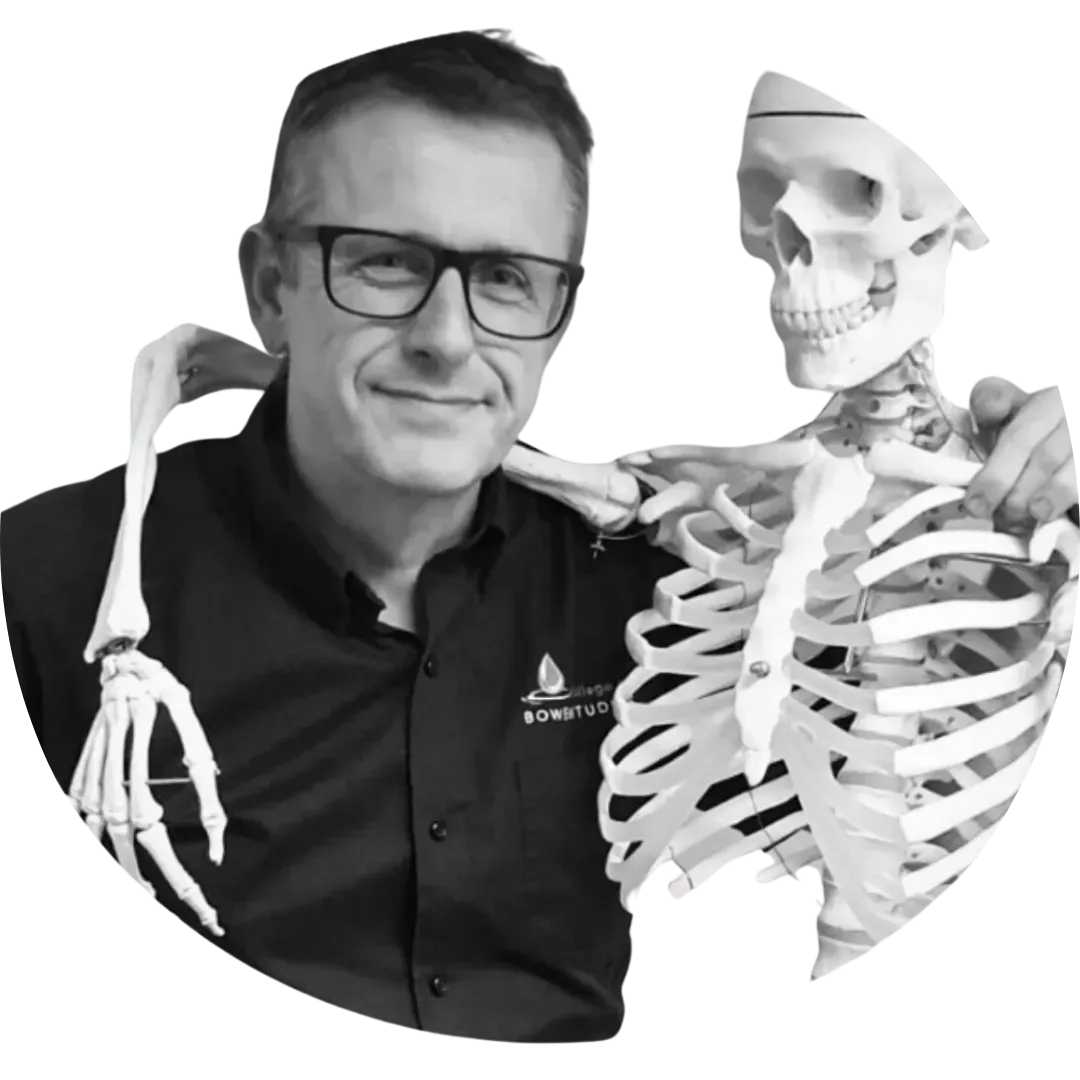
ABOUT JULIAN
JULIAN BAKER BSc (Hons)
Functional Anatomist and Health Science Educator
Julian has been teaching anatomy, dissection and bodywork classes for over thirty years.
Something of a heretic within the anatomical establishment, he challenges the norms of conventional anatomical thinking and creates a new paradigm in how anatomy is taught.
His humorous, gentle and patient approach encourages application over academic knowledge and seeks to dismantle what many of us take for granted.
Julian has decades worth of experience in the therapy field and has a depth of knowledge that is second to none, ensuring that any learning experience with him is unforgettable
READ SOME REVIEWS
Don't just take our word for it...
"To 'see' the soft tissue we as therapists think we influence is a privilege. Julian Baker makes all the right connections between the 'tissue' and considerations for therapeutic intervention. Functional Anatomy is a must for all 'hands on' therapists. It is also a must for the 'hands off' body of therapists! Seeing is believing.."
"Captivating, often bizarre and incredible insights into the human body like you have never seen before. Always life changing sessions, questioning the “norm” as we are taught it and bringing new dimensions to your practise.
If you attend one of Julian's classes your working brain will be changed forever - for the better and you will only want to see more!! His humour is also legendary!!"
"I have just participated in the scar tissue dissection course. This is an incredible lesson in anatomy. Julian takes you on a journey thru a human body like you've never been before. It is amazing to see how a human body is really built, how strong, how resilient. Eye-opening and educating. Thank you.
I will be back for more."
Want to rethink what your hands are actually doing?
We're excited to have you on board!
Site: www.touchmoveheal.com
Email: [email protected]

Touch Move Heal All rights reserved