
THE MONDAY WEBINAR SERIES:
Fascia in the Ageing Body
Why do two people of the same age move completely differently? The answer isn’t just about fascia, or any one tissue.
.
Fascia responds to circumstances and how any given system is operating. When less movement is present, fascia WILL change accordingly.
It's believed by some that fascia stiffens with age. This webinar will explore the myths, the realities and what actually changes.
This session draws directly from cadaveric dissection rather than idealised textbook simplifications, looking at real tissue variation.
Using dissection footage, we’ll explore:
What actually changes in fascia with age (and what doesn’t)
Why structure alone doesn’t explain movement decline
The difference between tissue change and behaviour change
Why two identical structures can produce different outcomes
The language and terms around ageing often follow familiar patterns of frailty, assumptions about stiffness and tissues as having specific patterns.
These are rarely accurate
If anything they can prevent effective treatment, by creating ideas around ageing structures that are unhelpful
If you’ve ever felt that the explanations around ageing don’t quite match what you see in practice, this webinar will give you a more useful way of thinking about it.
Fascia and Ageing
How connective tissues change as we age
For permanent access to this and previous webinars
Join the Archive Membership
£12.50
per month
ABOUT THIS WEBINAR
Fascia and Ageing: From Structural Change to Functional Behaviour
This webinar is for therapists, movement teachers, and curious practitioners who want a clearer, more realistic way of thinking about fascia and anatomy — without chasing myths or techniques that promise quick fixes.
In this webinar we'll explore:
Why 'loss of elasticity' is unhelpful and incomplete
Why stiffness can increase even when tissue hasn’t worsened
The difference between ageing tissue and behaviour change
What can change and how
Why some people become more resilient with age while others become more fragile
What ageing connective tissue really looks like

Format & access
Recorded webinar (approx. 60 minutes)
Available Instantly
Ongoing access available via the
Webinar Collection Membership
Other Webinars in the Series
Core and core stability
The myth of muscle growth and micro-trauma
Stretching- what's really happening?
Why clients won't do their homework
Hip stability - more than just a local issue
Adhesions vs scars. What's the difference?
Fascia in the ageing body
Shoulders aren't ball and socket joints
Spines negotiate rather than collapse
Fascia and Load
Pain. Systems not structures
Forward head posture. The new smoking?
Knee Pain. New thinking, better outcomes
Frequently Asked Questions FAQs
What is this fascia and ageing webinar about?
This recorded webinar explores fascia, ageing, stiffness, connective tissue, movement decline and why two people of the same age can move very differently.
Does fascia simply stiffen with age?
Fascia and connective tissue can change with age, but stiffness is not explained by tissue ageing alone. Movement history, load, behaviour, recovery, confidence and wider system adaptation all matter.
Why do some people become stiff as they age while others stay mobile?
People of the same age can have very different movement options because ageing is shaped by load, habit, injury history, nervous system response, confidence, recovery, strength, variation and behaviour as well as tissue state.
Is loss of elasticity the main reason movement changes with age?
Loss of elasticity is an incomplete explanation. The webinar looks at why movement decline is better understood through tissue adaptation, load tolerance, behavioural change and the wider system.
Who is this fascia and ageing webinar for?
This recorded webinar is for therapists, movement teachers, bodyworkers and health practitioners who want a clearer way to think about fascia, ageing, stiffness, mobility and clinical change.
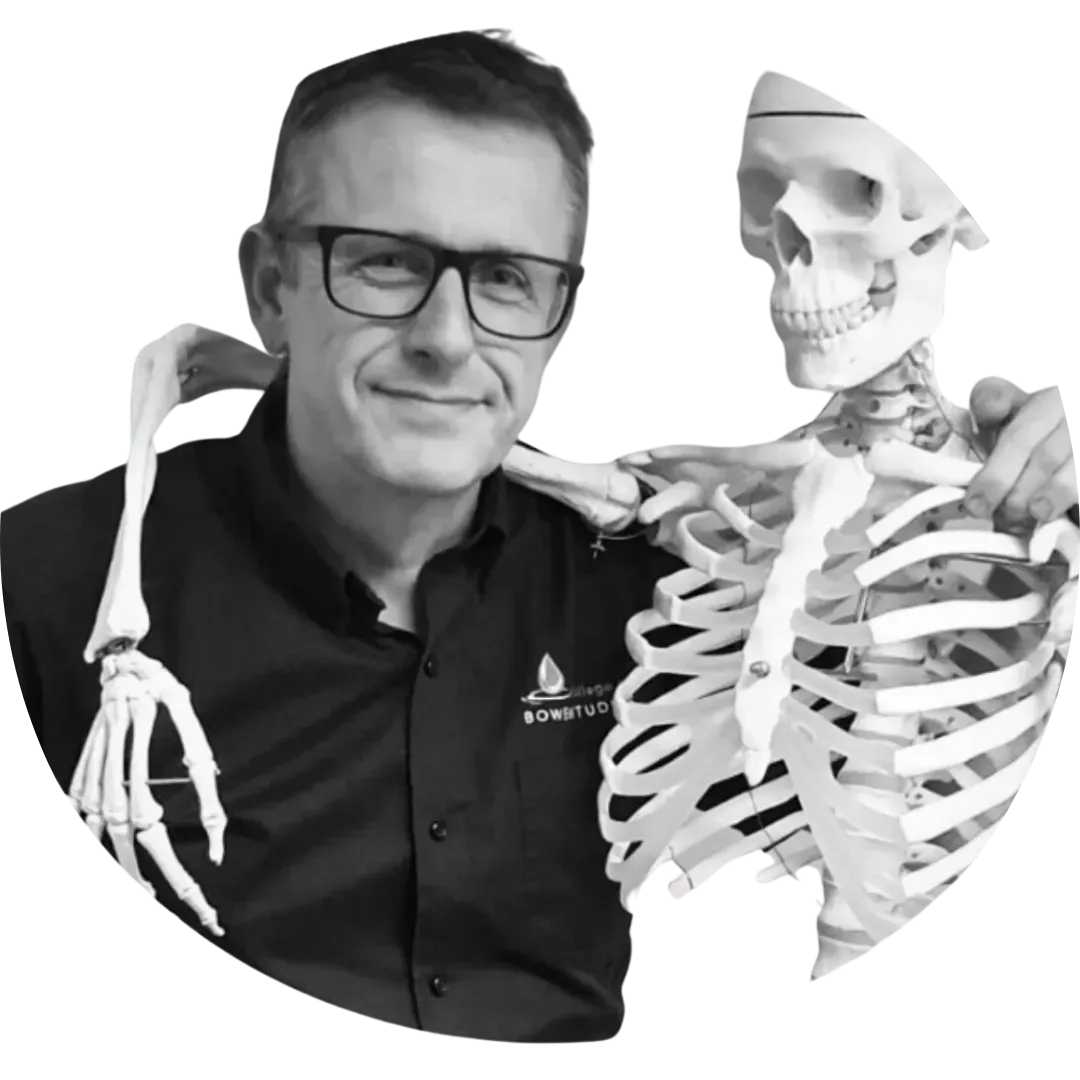
ABOUT JULIAN
JULIAN BAKER BSc (Hons)
Functional Anatomist and Health Science Educator
Julian has been teaching anatomy, dissection and bodywork classes for over thirty years.
Something of a heretic within the anatomical establishment, he challenges the norms of conventional anatomical thinking and creates a new paradigm in how anatomy is taught.
His humorous, gentle and patient approach encourages application over academic knowledge and seeks to dismantle what many of us take for granted.
Julian has decades worth of experience in the therapy field and has a depth of knowledge that is second to none, ensuring that any learning experience with him is unforgettable
READ SOME REVIEWS
Don't just take our word for it...
"To 'see' the soft tissue we as therapists think we influence is a privilege. Julian Baker makes all the right connections between the 'tissue' and considerations for therapeutic intervention. Functional Anatomy is a must for all 'hands on' therapists. It is also a must for the 'hands off' body of therapists! Seeing is believing.."
"Captivating, often bizarre and incredible insights into the human body like you have never seen before. Always life changing sessions, questioning the “norm” as we are taught it and bringing new dimensions to your practise.
If you attend one of Julian's classes your working brain will be changed forever - for the better and you will only want to see more!! His humour is also legendary!!"
"I have just participated in the scar tissue dissection course. This is an incredible lesson in anatomy. Julian takes you on a journey thru a human body like you've never been before. It is amazing to see how a human body is really built, how strong, how resilient. Eye-opening and educating. Thank you.
I will be back for more."
ARE YOU READY TO BUY THIS WEBINAR?
We're excited to have you on board!
Site: www.touchmoveheal.com
Email: [email protected]

Touch Move Heal All rights reserved