
THE MONDAY WEBINAR SERIES:
The Psoas: Tight, weak, traumatised? Or simply doing its job?
Is the psoas really the troublesome muscle we've made it out to be?
The psoas has acquired an extraordinary reputation.
It gets blamed for back pain, anterior pelvic tilt, poor posture and dysfunctional hips. It is described as chronically tight, inhibited or weak. We get told that sitting shortens it, stretching lengthens it and skilled hands can reach deep into the abdomen to release it.
Then there are the even bigger claims. The psoas has been referred to as 'the muscle of the soul' and attributed with being a storehouse for trauma and emotion and even a physical expression of our fight or flight response.
But how much of this is actually supported by anatomy and evidence?
Perhaps more importantly,
What if the psoas isn't actually dysfunctional at all?
What if much of what we're feeling and interpreting as tightness is simply a muscle adapting to the job the nervous system is asking it to do?
In this webinar we'll take the psoas back to anatomy first, then rebuild the clinical story from there.
We’ll also visit a remarkable anatomical crossroads where the psoas, diaphragm, major neural structures and central lymphatic pathways converge and ask whether movement and breathing might influence this region.
We'll Explore
What exactly IS the psoas?
What does the psoas do during movement and gait
Is the psoas really 'tight' or 'short' and is this possible?
Can someone have a weak psoas and if so what does this mean?
Does sitting shorten the psoas?
The possible role of the psoas in lymphatic movement
Can you palpate the psoas and what does this do?
What happens during psoas 'release'?
Does the psoas store trauma
Can we and should we stretch the psoas?
Dissection evidence of the psoas and surrounding tissues
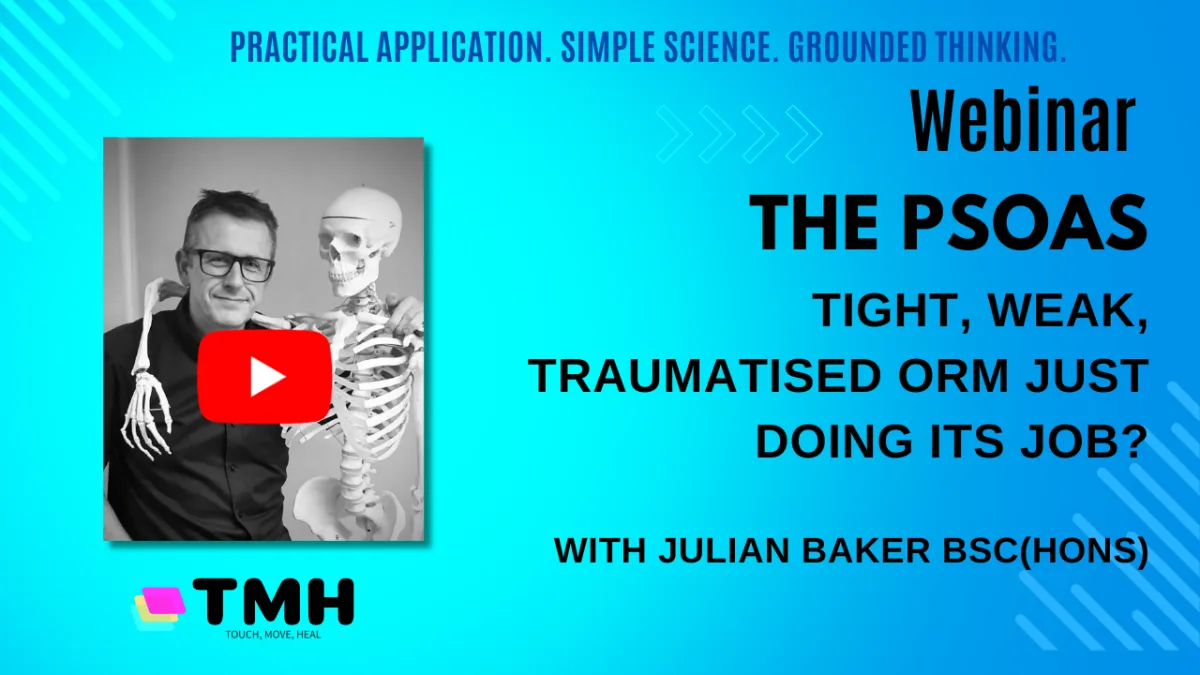
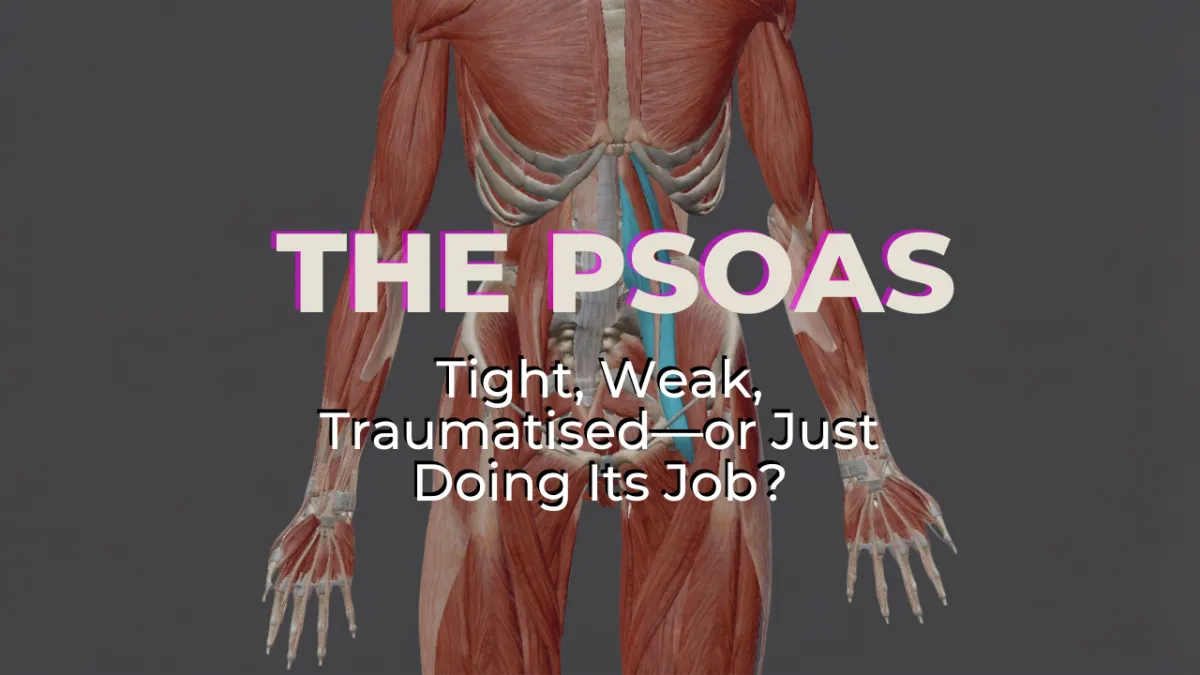
The Psoas
Myths vs Evidence
For permanent access to this and previous webinars
Join the Touch Move Heal Membership
£12.50
per month
Read More Reviews. Click Below
ABOUT THIS WEBINAR
Understanding the Psoas. Tight, Traumatised or Just Doing Its Job?
This webinar is for therapists, trainers, and movement professionals who and anyone interested in understanding the body beyond simple “tight versus weak” explanations.
In this webinar we'll explore:
The evidence behind the stories of the psoas
The location of the muscle and its relationship to breath, movement and function
Whether we can, should or need to 'release' the psoas
The claims around the emotional qualities of the psoas
Where the psoas might be involved in certain presentations and how to tell
Format & access
Recorded webinar (approx. 60 minutes)
Ongoing access available via the
Webinar Collection Membership
Other Webinars in the Series
Understanding GLP-1 Weight Loss Jabs
Core and core stability
The myth of muscle growth and micro-trauma
Stretching- what's really happening?
Why clients won't do their homework
Hip stability - more than just a local issue
Adhesions vs scars. What's the difference?
Fascia in the ageing body
Shoulders aren't ball and socket joints
Spines negotiate rather than collapse
Fascia and Load
Pain. Systems not structures
Forward head posture. The new smoking?
Knee Pain. New thinking, better outcomes
Frequently Asked Questions FAQs
Will you show the anatomy of the psoas?
Yes. Anatomy forms the foundation of the webinar. Using dissection images, we'll examine the psoas in relation to the lumbar spine, pelvis, hip and surrounding tissues before considering what those relationships might mean in movement.
Is the psoas a hip flexor?
The psoas can contribute to hip flexion, but describing it simply as a hip flexor misses much of the story. Its function depends upon position, load, which end of the muscle is relatively fixed and what the rest of the system is doing.
Can a psoas really become tight?
It depends on how anyone defines “tight”! A muscle can feel tight without being shortened. Increased activity through an area, guarding, stiffness, sensitivity and reduced tolerance to movement can all produce sensations that could be interpreted as tightness. By itself, it's unlikely that a psoas alone is tight.
Does sitting shorten the psoas?
The oft repeated claim that sitting somehow shortens the psoas is difficult to support. The webinar will explore how tissues like the psoas can adapt to changing positions and inactivity, without reducing it to a muscle that has become physically stuck at one length.
Can you palpate the psoas through the abdomen?
Parts of the region can be approached manually, but confidently identifying the psoas and determining its mechanical state through layers of abdominal tissue is considerably more difficult than is sometimes suggested. We'll look at the anatomical realities and limitations.
Does the psoas store emotional trauma?
Threat, stress and emotional state are influencers of muscle activity and movement. However this is different from demonstrating that traumatic memories are physically stored inside a particular muscle and this difference will be discussed.
What is the connection between the psoas and the diaphragm?
They both have important anatomical and functional relationships within the trunk. However these relationships are sometimes exaggerated into unproven claims of direct mechanical or emotional links. We'll consider the connections and separate them out from direct relationships.
Can the psoas cause back pain?
The anatomical relationship between the psoas and lumbar spine makes back pain an important part of the discussion, but the webinar will avoid presenting the psoas as a universal explanation for lumbar pain.
Should everyone stretch their hip flexors?
No. Stretching can be useful, but whether it is useful depends on the goal. We'll look at stretching, mobility, loading and movement variability rather than prescribing one universal psoas stretch.
Is this webinar only for manual therapists?
No. It is relevant to massage therapists, bodyworkers, Pilates and yoga teachers, personal trainers, movement professionals and health educators. No advanced anatomy knowledge is required.
If cannot attend live, is there a recording?
Yes. Everyone who purchases the webinar receives access to the recording for 14 days. Touch Move Heal Members receive permanent access as part of their membership.
ABOUT JULIAN
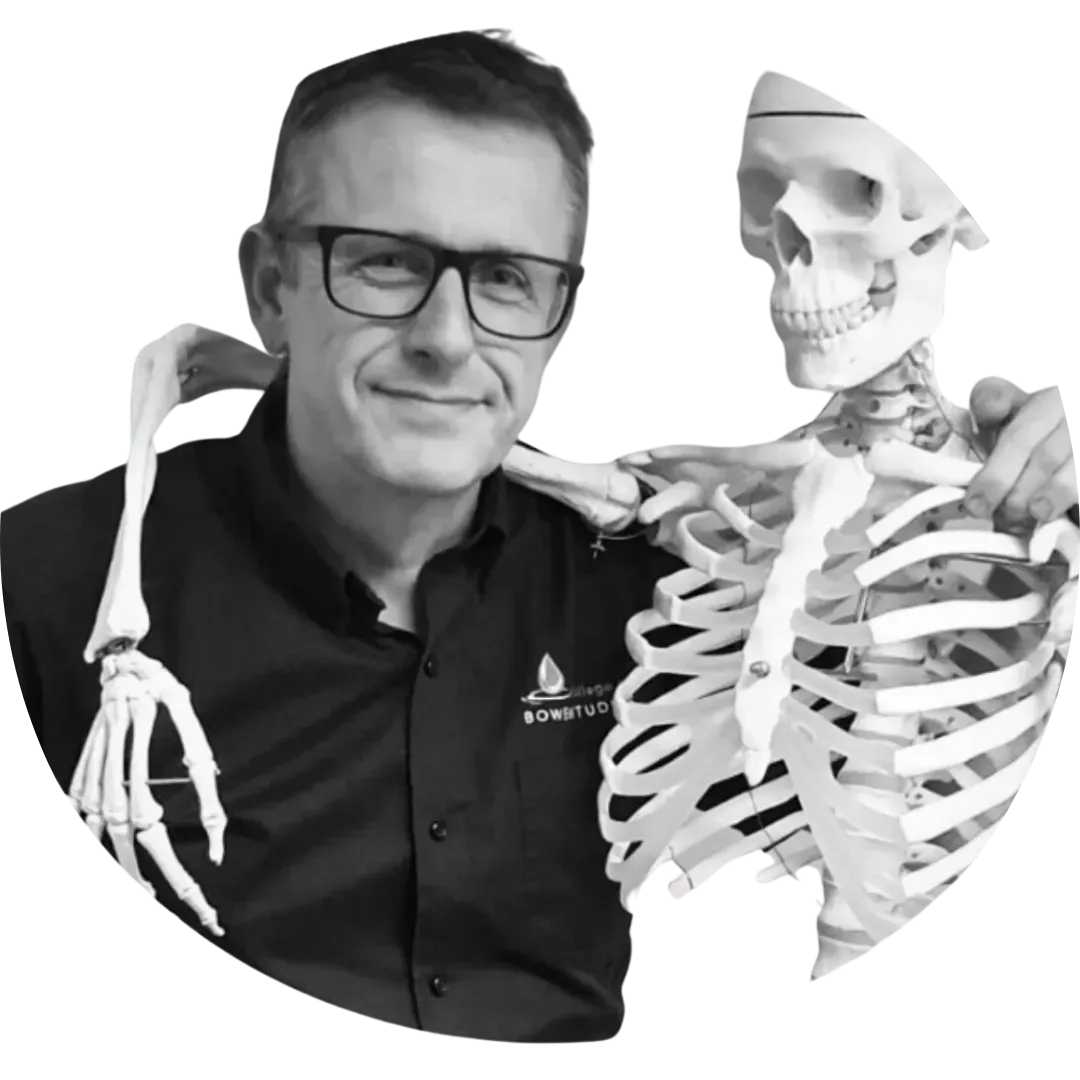
JULIAN BAKER BSc (Hons)
Functional Anatomist and Health Science Educator
Julian has been teaching anatomy, dissection and bodywork classes for over thirty years.
Something of a heretic within the anatomical establishment, he challenges the norms of conventional anatomical thinking and creates a new paradigm in how anatomy is taught.
His humorous, gentle and patient approach encourages application over academic knowledge and seeks to dismantle what many of us take for granted.
Julian has decades worth of experience in the therapy field and has a depth of knowledge that is second to none, ensuring that any learning experience with him is unforgettable
READ SOME REVIEWS
Don't just take our word for it...
"To 'see' the soft tissue we as therapists think we influence is a privilege. Julian Baker makes all the right connections between the 'tissue' and considerations for therapeutic intervention. Functional Anatomy is a must for all 'hands on' therapists. It is also a must for the 'hands off' body of therapists! Seeing is believing.."
"Captivating, often bizarre and incredible insights into the human body like you have never seen before. Always life changing sessions, questioning the “norm” as we are taught it and bringing new dimensions to your practise.
If you attend one of Julian's classes your working brain will be changed forever - for the better and you will only want to see more!! His humour is also legendary!!"
"I have just participated in the scar tissue dissection course. This is an incredible lesson in anatomy. Julian takes you on a journey thru a human body like you've never been before. It is amazing to see how a human body is really built, how strong, how resilient. Eye-opening and educating. Thank you.
I will be back for more."
Want to rethink what your hands are actually doing?
We're excited to have you on board!
Site: www.touchmoveheal.com
Email: [email protected]

Touch Move Heal All rights reserved