
TMH Webinar Series
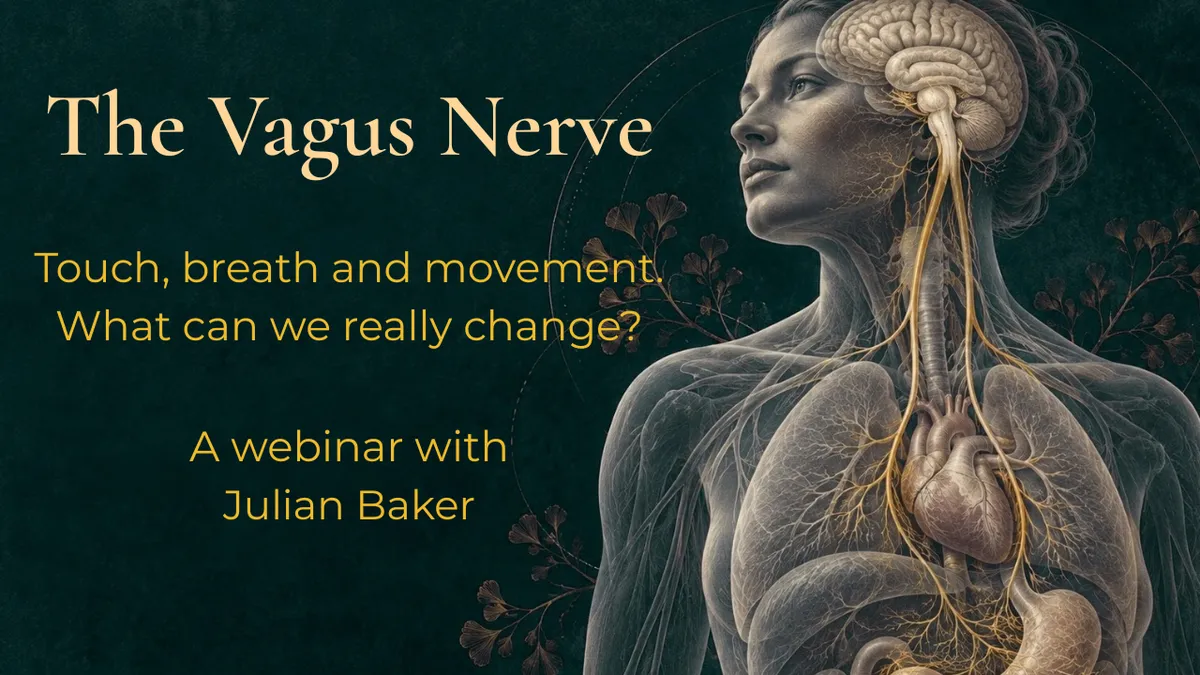
The Vagus Nerve: What Can Touch, Breath And Movement Really Change?
TMH Webinar Series • With Julian Baker
Recorded webinar — watch immediately.
Approximately one hour of educational content.
Suitable for manual therapists, movement professionals and curious practitioners.
Price: £14.50.
“You need to release your vagus nerve.”
It’s quite a claim!
What, exactly, is being released? Where is the restriction? And how would we know that the vagus nerve was the thing we changed?
The vagus has become a popular explanation for how we feel, how we respond to stress and what happens during treatment. We’re encouraged to stimulate it, tone it, reset it and, apparently, release it.
Some of those conversations draw on real physiology. Others take a rather large leap.
In this webinar, we use anatomy and research to explore what the vagus actually does, how touch, breathing and movement might influence our responses, and where explanations might run ahead of the evidence.
If someone feels calmer after treatment, what have we actually demonstrated?
See the anatomy behind the claims
Before deciding what we can do to a nerve, it helps to know where it is.
We’ll start with a brief explanation of cranial nerves and spinal nerves: where they connect to the central nervous system, where they travel and why the distinction matters.
We’ll look at the brain and cranial nerves, then follow the vagus through its relationships in the neck, chest and abdomen.
Along the way, we’ll explore its roles in sensation, voice, swallowing and the regulation of internal organs.
There is considerably more to this nerve than “rest and digest”.
It’s in the neck. What does that allow us to claim?
The vagus is physically present in the neck, within the carotid sheath and close to major blood vessels.
But placing a hand over that region doesn't establish that we have selectively contacted the nerve. Even direct mechanical contact wouldn't, by itself, offer any useful effect.
Touch can influence someone’s experience on lots of levels. The question is how confidently we can explain that response. Location, influence and treatment are all different claims.
We’ll examine what “vagal release” is supposed to mean, what evidence hands-on approaches provide and why feeling a change under our fingers doesn't offer many conclusions.
Take a breath. What changed?
Breathing offers a useful way into this discussion because we can deliberately change something that usually happens without much thought.
But what follows when we slow our breath down?
We’ll look at breathing, heart rate and autonomic responses, including what heart rate variability can tell us, as well as where it's harder to connect vagus throughout the body.
We’ll also untangle a common anatomical confusion. The phrenic nerve provides the motor supply to the diaphragm, but the vagus has a different role. Understanding both helps us ask better questions about “diaphragmatic breathing” and vagal claims.
Movement belongs in this conversation too. We’ll consider how activity, effort, position and recovery affect the context in which we measure a response, and what evidence would justify calling a movement a vagus nerve exercise.
Polyvagal theory: what does the evidence support?
Polyvagal theory has brought the vagus into conversations about safety, connection, trauma and emotional states.
We’ll look at what the theory proposes, why its anatomical and evolutionary claims are disputed, and how to separate established physiology from an interpretation of someone’s experience.
The gut, the pelvis and a few surprises
How much does the vagus tell the gut what to do—and how much can the gut organise for itself?
We’ll explore its relationship with the enteric nervous system, the extensive network within the gut wall, and consider why “the brain–gut connection” involves more than one nerve.
We’ll also look at genitourinary relationships, including intriguing research suggesting a vagal sensory route from the cervix and vagina in women with spinal cord injury. What might it tell us, and how far can we reasonably take the findings?
Video Introduction
The Vagus Nerve
What can we affect?
For permanent access to this and previous webinars
Join the Touch Move Heal Membership
£12.50
per month
Read More Reviews. Click Below
"I really enjoy Julian speak and present. It's clear, personable and informative."
CL - Massage Therapist
In this webinar we'll explore
Cranial nerves and spinal nerves: a clear starting point for understanding the routes.
Vagus nerve function: sensory information, parasympathetic activity, voice and swallowing.
The neck: anatomical proximity, access and the limits of treatment claims.
The phrenic nerve: the diaphragm’s motor supply and its place in the breathing story.
Hands-on work: what studies measure and whether they demonstrate a specific vagal effect.
Breath and movement: possible benefits, physiological responses and the explanations we attach to them.
Polyvagal theory: its proposals, supporting arguments and scientific challenges.
The enteric nervous system: the gut’s own circuitry and its communication with the brain.
Genitourinary relationships: established pathways, unusual findings and unresolved questions.
ABOUT THIS WEBINAR
A closer look at a much discussed nerve
This webinar is for massage therapists, bodyworkers, Pilates and yoga teachers, personal trainers, movement professionals and anyone interested in understanding the body beyond the usual explanations.
In this webinar we'll explore:
What do you mean when you tell a client you are working on their vagus nerve?
What would demonstrate that your technique had a specific effect?
What are you assessing when you ask them to bend forwards?
How can you explain a helpful response without claiming more than you know?
Format & access
Recorded webinar with Julian Baker — approximately 60 minutes.
Instant Access
Ongoing access is available through the Touch Move Heal Membership.
Other Webinars in the Series
Understanding GLP-1 Weight Loss Jabs
Core and core stability
The myth of muscle growth and micro-trauma
Stretching- what's really happening?
Why clients won't do their homework
Hip stability - more than just a local issue
Adhesions vs scars. What's the difference?
Fascia in the ageing body
Shoulders aren't ball and socket joints
Spines negotiate rather than collapse
Fascia and Load
Pain. Systems not structures
Forward head posture. The new smoking?
Knee Pain. New thinking, better outcomes
Frequently Asked Questions FAQs
Will there be real human dissection?
Yes. Julian will use brain and cranial nerve dissection material to explore the anatomy and its relationships. The webinar includes images of real human tissue.
Who is this webinar for?
Massage therapists, bodyworkers, Pilates and yoga teachers, personal trainers, movement professionals and anyone interested in understanding the body beyond familiar explanations. No advanced anatomy knowledge is required.
What if I cannot attend live?
Advance booking includes 14 days of replay access, so you can watch afterwards or revisit the material. Touch Move Heal members have ongoing access through their membership.
How much does the webinar cost?
The replay price is £14.50. The webinar with access to full research papers, is also included in the Touch Move Heal Membership at £12.50 per month.
ABOUT JULIAN
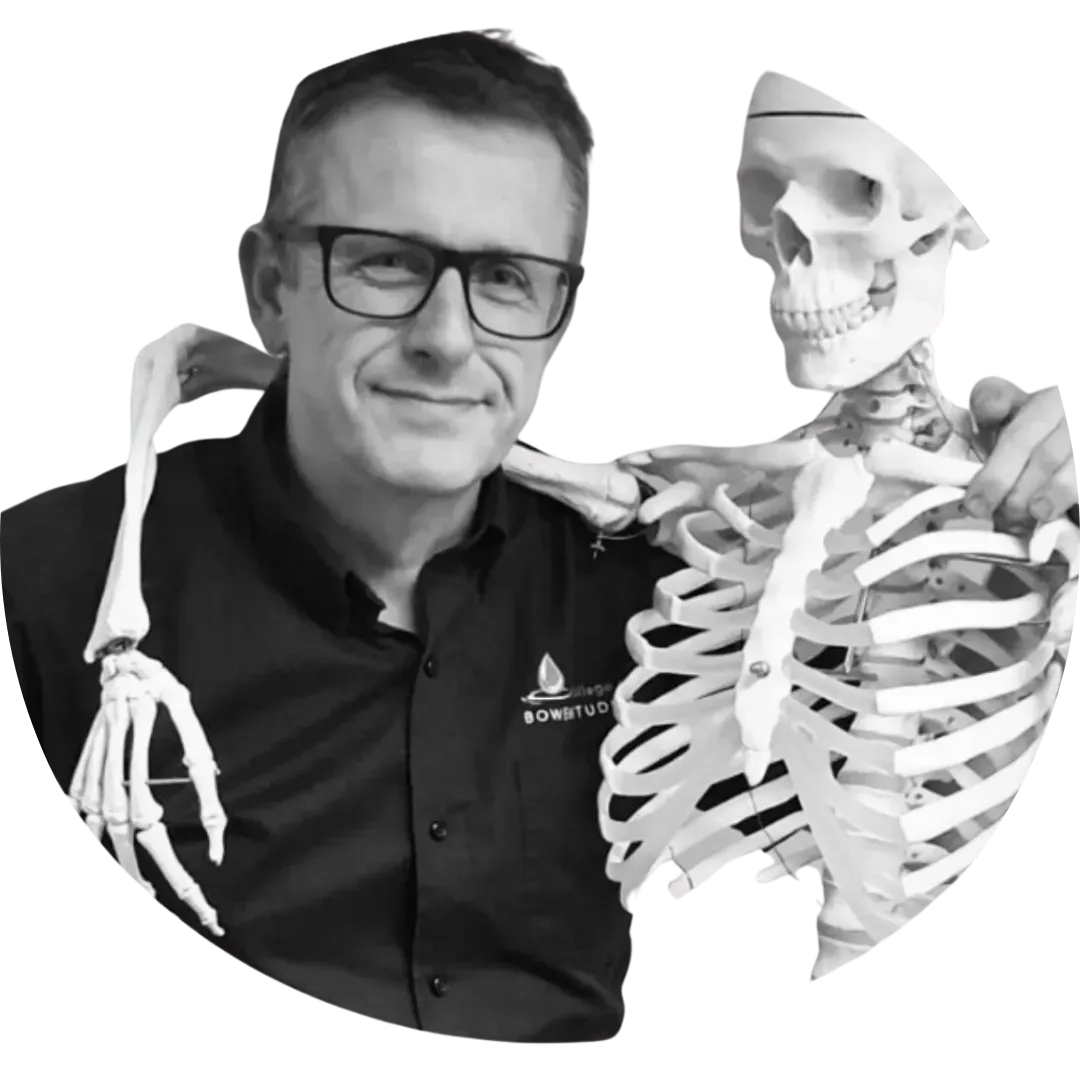
JULIAN BAKER BSc (Hons)
Functional Anatomist and Health Science Educator
Julian has been teaching anatomy, dissection and bodywork classes for over thirty years.
Something of a heretic within the anatomical establishment, he challenges the norms of conventional anatomical thinking and creates a new paradigm in how anatomy is taught.
His humorous, gentle and patient approach encourages application over academic knowledge and seeks to dismantle what many of us take for granted.
Julian has decades worth of experience in the therapy field and has a depth of knowledge that is second to none, ensuring that any learning experience with him is unforgettable
READ SOME REVIEWS
Don't just take our word for it...
"To 'see' the soft tissue we as therapists think we influence is a privilege. Julian Baker makes all the right connections between the 'tissue' and considerations for therapeutic intervention. Functional Anatomy is a must for all 'hands on' therapists. It is also a must for the 'hands off' body of therapists! Seeing is believing.."
"Captivating, often bizarre and incredible insights into the human body like you have never seen before. Always life changing sessions, questioning the “norm” as we are taught it and bringing new dimensions to your practise.
If you attend one of Julian's classes your working brain will be changed forever - for the better and you will only want to see more!! His humour is also legendary!!"
"I have just participated in the scar tissue dissection course. This is an incredible lesson in anatomy. Julian takes you on a journey thru a human body like you've never been before. It is amazing to see how a human body is really built, how strong, how resilient. Eye-opening and educating. Thank you.
I will be back for more."
Want to rethink what your hands are actually doing?
We're excited to have you on board!
Site: www.touchmoveheal.com
Email: [email protected]

Touch Move Heal All rights reserved