
THE MONDAY WEBINAR SERIES:
What Is Fascia? The Tissue, the Hype and the Evidence
Fascia has been credited with holding the body together, storing trauma, transmitting force, causing pain—and being “released” by almost every manual therapy technique imaginable.
Fascia IS real and it IS important, but how much of the 'story' is factual?
Join this evidence-based webinar to explore what fascia really is, what it does, how it relates to movement and pain, and where popular explanations might have travelled a bit further than the science suggests.
Not every claim about fascia is true
Fascia is often described as a continuous web, a body-wide communication system, a force-transmitting network, a sensory organ or even a place where emotional trauma is stored.
Some of these descriptions contain useful ideas. Others confuse metaphors with mechanisms and take limited evidence far beyond its findings, even giving new anatomical names to changes that may involve the nervous system, movement, expectation, pain modulation and context.
The choice isn't between believing that fascia explains everything and pretending it doesn't matter. Instead the question is: what does the evidence allow us to say—and what remains uncertain?
What fascia is made of and how it differs from the vague idea of “connective tissue”.
Whether fascia should be understood as one body-wide organ or as a family of related tissues.
How fascia adapts to load, movement, immobility, injury and age.
Whether fascia can become tight, stuck, dehydrated or adhered.
What practitioners may be feeling when tissue appears to soften beneath their hands.
Whether manual therapy can mechanically “release” or permanently reshape fascia.
Why changes in pain and movement can be real even when the traditional structural explanation is doubtful.
The idea of fascia as sensory tissue .
Fascia and emotional storage.
How to discuss fascia honestly without undermining the value of touch or movement.
What is Fascia?
Myths vs Evidence
For permanent access to this and previous webinars
Join the Touch Move Heal Membership
£12.50
per month
ABOUT THIS WEBINAR
What Is Fascia? The Tissue, the Hype and the Evidence
This webinar is for therapists, trainers, and movement professionals who want to understand what fascia is, what it does and what the science tells us
In this webinar we'll explore:
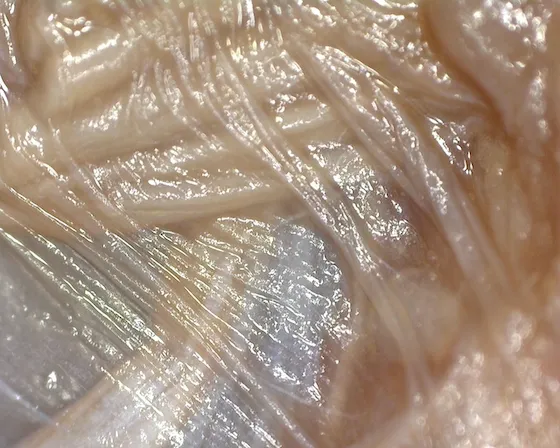
The key elements that define fascia and how it appears in the body
What we can do within manual and movement settings to affect fascia and, as importantly what we can't do
How fascia gets laid down and how it changes in the body
The different types of fascia and their names
Some of the stories around fascia, fascial release, bio-tensegrity and other ideas
Format & access
Recorded webinar (approx. 60 minutes)
Access also available via the
Webinar Collection Membership
Other Webinars in the Series
Understanding GLP-1 Weight Loss Jabs
Core and core stability
The myth of muscle growth and micro-trauma
Stretching- what's really happening?
Why clients won't do their homework
Hip stability - more than just a local issue
Adhesions vs scars. What's the difference?
Fascia in the ageing body
Shoulders aren't ball and socket joints
Spines negotiate rather than collapse
Fascia and Load
Pain. Systems not structures
Forward head posture. The new smoking?
Knee Pain. New thinking, better outcomes
Frequently Asked Questions FAQs
What is fascia?
Fascia is a broad term for connective tissues that surround, connect, separate and support muscles, organs, nerves, blood vessels and other structures. It is not simply wrapping material, but neither is every connective tissue identical in structure or function.
Is fascia one continuous organ?
Fascial tissues are physically continuous in many regions of the body, but describing fascia as a single organ can hide important differences between superficial fascia, deep fascia, aponeuroses, retinacula, visceral connective tissues and other structures. Continuity does not mean every part behaves in the same way or that a change in one place produces a predictable effect elsewhere.
Can fascia become 'tight' or 'stuck'?
People may experience stiffness, restriction or altered movement, and tissues may change with injury, inflammation, scarring, load, immobility and age. However, saying “the fascia is stuck” is usually an interpretation rather than a directly demonstrated diagnosis. Sensation, muscle activity, pain, expectation and movement strategy can all contribute to the experience of tightness.
Can manual therapy 'release' fascia?
Manual therapy can change sensation, pain, movement, muscle activity, guarding and a person’s sense of ease. Tissue can also deform temporarily under pressure. These outcomes do not demonstrate that fascia was physically stuck and then permanently released. “Myofascial release” may describe a therapeutic approach, but it should not automatically be treated as a proven mechanism.
Does fascia store emotional trauma?
Traumatic experiences can influence pain, muscle tone, autonomic responses, movement, memory and a person’s response to touch. That is different from demonstrating that memories or emotions are literally stored in fascial tissue. “The body remembers” can be a meaningful description of embodied experience, but it should not be mistaken for a specific connective-tissue mechanism.
Is fascia the body’s largest sensory organ?
Fascial tissues contain sensory nerve endings and can contribute to proprioception, interoception and nociception. Calling fascia the body’s “largest sensory organ” is a much stronger claim and depends heavily on how fascia and organ boundaries are defined. It is safer to say that fascia is richly innervated and participates in sensory function.
Can fascia become dehydrated?
Water and ground substance influence the mechanical behaviour of connective tissue, but everyday claims that a particular restriction is caused by “dehydrated fascia” or that drinking water immediately releases it are oversimplified. Whole-body hydration, local fluid behaviour, tissue loading and extracellular-matrix biology are related but not interchangeable ideas.
Does fascia transmit force between muscles?
Force can be transmitted through connective tissues within and between muscle units. The amount and clinical importance depend on anatomy, loading conditions and the method used to measure it. Evidence of force transmission does not prove that distant pain or movement problems can be mapped through fixed fascial lines, or that treating one point will predictably change another.
Is this webinar only for manual therapists?
No. It is relevant to massage therapists, bodyworkers, Pilates and yoga teachers, personal trainers, movement professionals and health educators. No advanced anatomy knowledge is required.
What happens if I cannot attend live?
Everyone who purchases the webinar receives access to this recording only.. Touch Move Heal Members receive access to all webinars as part of their membership.
ABOUT JULIAN
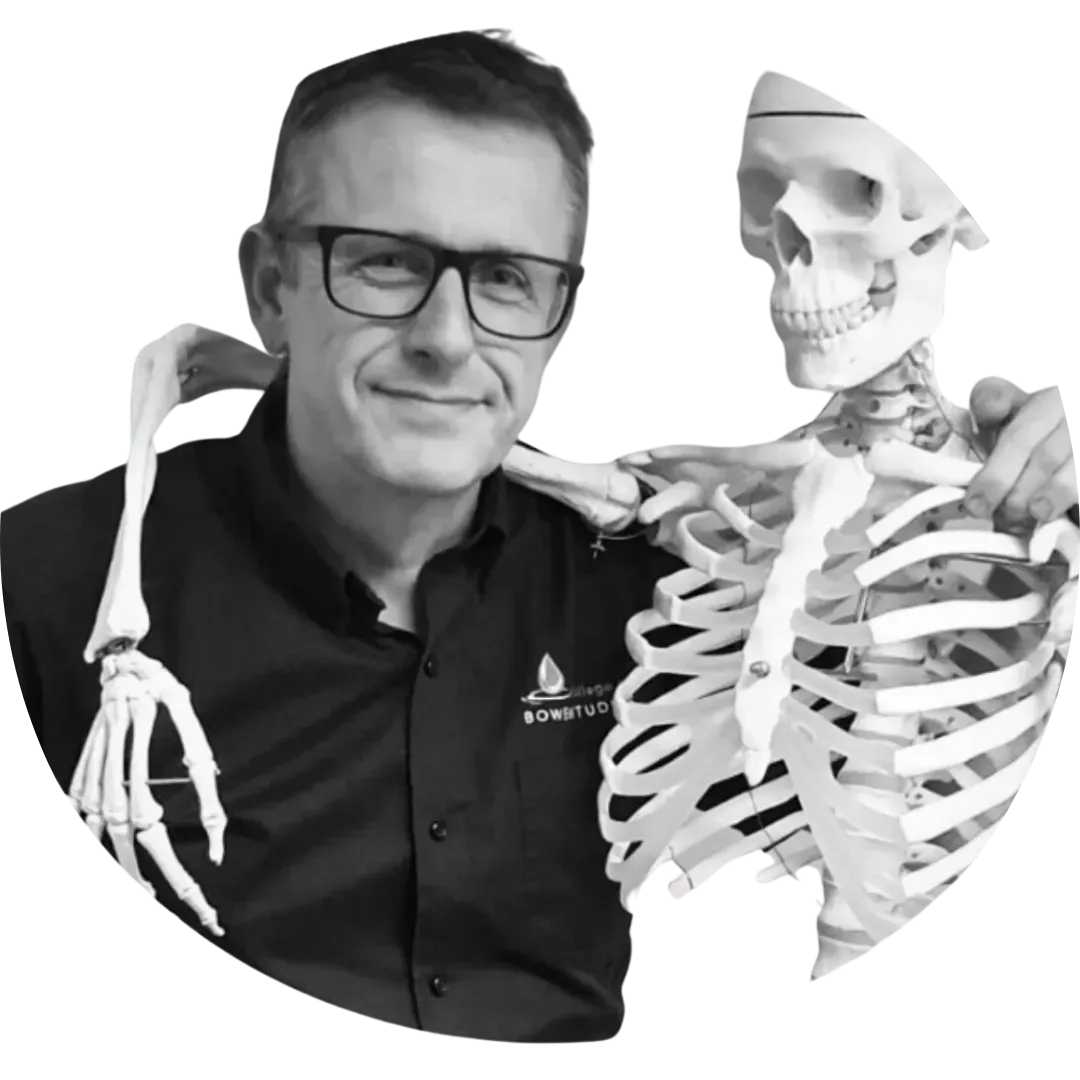
JULIAN BAKER BSc (Hons)
Functional Anatomist and Health Science Educator
Julian has been teaching anatomy, dissection and bodywork classes for over thirty years.
Something of a heretic within the anatomical establishment, he challenges the norms of conventional anatomical thinking and creates a new paradigm in how anatomy is taught.
His humorous, gentle and patient approach encourages application over academic knowledge and seeks to dismantle what many of us take for granted.
Julian has decades worth of experience in the therapy field and has a depth of knowledge that is second to none, ensuring that any learning experience with him is unforgettable
READ SOME REVIEWS
Don't just take our word for it...
"To 'see' the soft tissue we as therapists think we influence is a privilege. Julian Baker makes all the right connections between the 'tissue' and considerations for therapeutic intervention. Functional Anatomy is a must for all 'hands on' therapists. It is also a must for the 'hands off' body of therapists! Seeing is believing.."
"Captivating, often bizarre and incredible insights into the human body like you have never seen before. Always life changing sessions, questioning the “norm” as we are taught it and bringing new dimensions to your practise.
If you attend one of Julian's classes your working brain will be changed forever - for the better and you will only want to see more!! His humour is also legendary!!"
"I have just participated in the scar tissue dissection course. This is an incredible lesson in anatomy. Julian takes you on a journey thru a human body like you've never been before. It is amazing to see how a human body is really built, how strong, how resilient. Eye-opening and educating. Thank you.
I will be back for more."
Want to rethink what your hands are actually doing?
We're excited to have you on board!
Site: www.touchmoveheal.com
Email: [email protected]

Touch Move Heal All rights reserved